Pages

Monday, April 15, 2013

RuralSWAlabama's photostream

Bellamy, AL - "The Rooster Bridge" Historical MarkerBladon Springs, AL - Bladon Springs State ParkGosport, AL - Woodlands Plantation Home (1840)Gosport, AL - Woodlands Plantation Home (1840)Gosport, AL - Woodlands Plantation Home (1840)Gosport, AL - Woodlands Plantation Home (1840)
Gosport, AL - Woodlands Plantation Home (1840)Thomasville, AL - Williams' Temple CME Church (consolidated with Booker City to form Miles College)Thomasville, AL - Williams' Temple CME Church (consolidated with Booker City to form Miles College)Thomasville, AL - Williams' Temple CME Church (consolidated with Booker City to form Miles College)Thomasville, AL - Williams' Temple CME Church (consolidated with Booker City to form Miles College)Thomasville, AL - Williams' Temple CME Church (consolidated with Booker City to form Miles College)
Thomasville, AL - Williams' Temple CME Church (consolidated with Booker City to form Miles College)Thomasville, AL - Williams' Temple CME Church (consolidated with Booker City to form Miles College)Cahaba, AL - St. Luke's Episcopal Church (built 1854)Cahaba, AL - St. Luke's Episcopal Church (built 1854)Cahaba, AL - St. Luke's Episcopal Church (built 1854)Cahaba, AL - St. Luke's Episcopal Church (built 1854)
Cahaba, AL - St. Luke's Episcopal Church (built 1854)Cahaba, AL - St. Luke's Episcopal Church (built 1854)Cahaba, AL - St. Luke's Episcopal Church (built 1854)Cahaba, AL - St. Luke's Episcopal Church (built 1854)Eutaw, AL - Winston-McAlpine House (ca. 1880)Eutaw, AL - Oliver-Braune  House (mid 1850’s)

Someone posted a photo from this page on Facebook and I found it very interesting. This is a region very important to the initial US development of NW Florida because so many of the American colonizers moved through or settled in this region first. I hope we can develop such a good collection of historic rural NW Florida homes.

Sunday, March 31, 2013

Apalachicola, At LAST (Pay attention Hernando)

.... ... (click HERE for the full series, read bottom post first)
The very next day, we drove over to Apalachicola where the bay of wonder oysters are soaking up the
somewhat massive flow of  fresh water out of Georgia and Alabama. The Flint and Chattahoochee rivers join up nearBainbridge Georgia and form the Apalachicola. DeSoto found this path and followed it as far as reasonable up North. As it turns out – to this very day, the Indians of that area, who were called the Apalachee and the Apalachicola, live on as the name for the whole water basin and mountain chain that knifes its way all the way to Maine. DeSoto sent his Captain of Infantry, Maldonado, by ship to the bay of Achusi (Pensacola - probably on Mulat Bayou) to meet him with a resupply of provisions at some later date. He came close - but after a battle with the Tuscaluza  at  Movila (Mobile) he turned his party North (again)  toward Tennessee and West to the Mississippi River.So, DeSoto totally missed Maldonado's camp by only a few days march, and later ran into mortal disaster further West. The Indian deaths in this and the prior Naravez expedition were horrific but inconsequential when you consider the likely millions in the Americas who died over the next 50 years from contagious pathogens unwittingly spread among a population with zero resistance.


 DeSoto never got much further North than the base of the Appalachian foothills before he headed West but the name stuck. A lot of people walk the trail every year and have no clue that way down South where the streams flow into the Gulf, is a town and a bay anchoring their Appalachian path.
mentioned earlier (in this blog)  about the Chattahoochee River, bordering Georgia and Alabama. The idyllic Town of Eufala, Alabama is bordered by those waters that flow to an oyster paradise. 
The headwaters of the Chattahoochee begin North of Gainesville, Georgia and form Lake Lanier. When a drought condition exists, Lake Lanier has to dump all its water out to help feed the oysters in Florida. Sometimes the cotton 
and cattle in Georgia take priority and the oysters get only a half glass, which is probably seen as half full by the Cattlemen in Georgia (and Alabama).
I can see a time coming when the Oyster Wars break out along the Tri-State borders for Florida, Alabama and Georgia. It will be like the old wild west Sheep wars of the 19th century, with a battle of Oyster-men vs Cotton Farmers vs Cattlemen – and maybe sail boat enthusiasts from Lake Lanier and Bass fishermen from Lake Walter George. Bring your own oyster knife.
This is only the start of THE OLD FLORIDA tour and I will cover more of Apalachicola in the next post. Be sure to follow the links in the blog - it may become habitually entertaining. Scroll down the blog for earlier posts.

Sunday, February 03, 2013

Father's poems - Son was Afghanistan Casualty

Father’s words offer healing, attention to PTSD | eb.gmnews.com | East Brunswick Sentinel
I am posting this link because I have observed this family for several years now as they deal with the stress of family loss.  Not only did the son die in combat - but his sister later became overwhelmed with grief and took her life as well.  The books Bill Koch writes and the work his wife does with veterans are expressions beyond the call of patriotism. In their caring efforts, they find solace in action for others.

Thursday, January 31, 2013

ALMOST to Florida

CONTINUING THE BLOG of our “OLD FLORIDA” Gulf Coast Tour
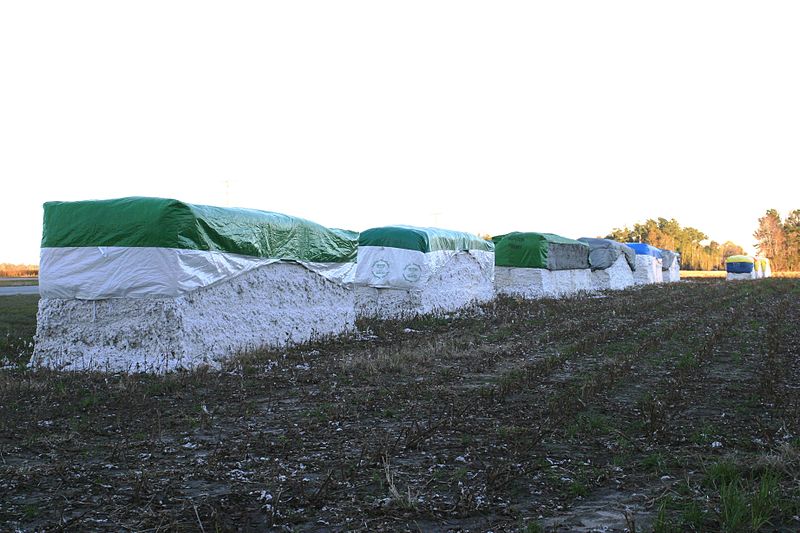
From Eufaula, the road shoots due South to find itself ending in Dothan, Alabama where it joins US Highway 231 out of Montgomery.  US 231 is the gateway to Florida from that part of Alabama.  Just before reaching Dothan, we passed a marshalling area for harvested cotton modules. A cotton module is essentially a tractor-trailer load of compressed raw cotton, ready for the gin (which is called that for short because at first it was called "Eli Whitney's Cotton EnGINe". In any case, I was impressed by the number of modules we saw. I am guessing we saw at least 500 modules in a single location --  and each consisting of about 40, 500 pound bales or 10 metric tons.  I have seen 40 or 50 at a time around the gin at Jay, Florida, near home and it is common to see a half dozen or even a dozen after some of the local fields near home are picked.  But to see 500. That was a lot.  The cotton is already transferred from the farmer to the gin as property once the cotton is in a module. This is a practical matter of liability and commerce. Here is a book I highly recommend.

Just to the West of us at this point is Fort Rucker, US Army Post. It is not unusual around here to see an Army helicopter chopping along. My great-grandpa Carswell came back to that area around Daleville after the “Late Unpleasantness” to become a  minister and rather poor dirt farmer. He never talked much about his experience with the US Army in 1864-65. He was their prisoner at Rock Island in Southern Illinois after being captured by Sheridan’s people at Chattanooga’s Missionary Ridge. Only one in four who walked in the gates came out alive. He was one of the 500 survivors. My friend from High School, Dan Holt, had a great grandfather at the same prison. He was in a sister brigade beside my great grandfather on Missionary Ridge that day when Sheridan’s troops disobeyed his order to hold at the base of the hill and instead, rushed forward against thin lines and broke the siege of Chattanooga.  My ancestor, Robert Knight Carswell was a lifelong Democrat until he was on his deathbed. At that point, he had his voter registration changed to REPUBLICAN because he wanted one more Republican (same thing as a “union soldier” in his mind ) to die off the voter rolls rather than a Democrat.

Dothan, Alabama impresses me.  There are obvious signs of economic growth in this town. I think Dothan is the one of the top five largest cities in Alabama now. (Birmingham and Hoover are one metro area. Huntsville and Decatur rank as one metro area too.)  I hate to make comparisons but I get the sense Dothan and Huntsville and Birmingham have the greatest progress among Alabama cities in the last decades. Montgomery is in decay on the inside with an Eastward bulge of economic success OUTSIDE of the city limits. Mobile has large blighted areas but is kindling success with new industry growth around ship-building and aircraft manufacture. Selma looks sadly "dead" downtown, its days of high commerce long gone.  Well, enough about Alabama. It is on our list to spend many weeks there in discovery.  There is much to see. OK -- I promise - the OLD FLORIDA tour begins with the next post (You can select to be notified of the next post using the link in the upper right corner of the blog.)

Friday, January 18, 2013

Getting to Florida

Through a turn of events we actually began our Florida tour coming out of Auburn, Alabama where our son is in his senior year of college.  We picked up state connecting roads out of Opelika to take us to US Highway 431 South, which is a superb four lane highway.

The Marquis de LaFayette, passed this way in 1825 on his grand tour of the America he helped to birth some five decades earlier. He was the last surviving general of the American Revolution. He was like a Rock Star of the day.  The Creek Indians participated in the welcome (the Creek War was about 10 years earlier - an extending circumstance of the War of 1812 with Britain - (yet again, the Brits). They held a ball game  in the Marquis’ honor (like lacrosse). The game ran late and traffic held up the wagons causing a day’s delay in his arrival at Montgomery where a special ball and party was planned the night before. Traffic on game day is still a problem in the area. Did I mention that George Washington was with the Marquis on that trip? Well, his son, George W was named after the Marquis’  former boss. The tavern he stayed in prior to arriving in Montgomery is preserved in Old Alabama Town.

Essentially Highway 431  follows the Chattahoochee RIver for most of the route and then bears South West. The town of Eufaula, there on the banks of the River facing Georgia, carries some of the glory of "The Old South" in character of the old homes. I've always liked Eufaula. It was one of my favorite places to stay overnight decades ago when I travelled the South for an Animal Health company.  

I'd usually stop by the Tom Mann fish aquarium and shop for plastic fishing worms in his store. He made one of the early fortunes in artificial plastic worms for fishing.  Tom Mann was a Creek Indian and he knew so much more than most of us will ever forget about the history that passed those river banks. He is dead now. The old aquarium is gone. The store is gone. I miss that.  But the area around Eufaula seems to be thriving. They had some upscale stores South of town.

Keep Eufaula and the upper reaches of the Chattahoochee and Flint Rivers in mind because they form the Apalachicola River and  if won’t be long before you’ll be reading my posts about the connection this River made with ports on the Southern end. The next blog post will take us from Here to Panama City. Then we will get back over to the Apalachicola River a few days later.

Thursday, January 17, 2013

Natives Tour Florida

From 2012-10c
We started this expedition in Florida in early January. We are not exactly typical Florida tourists. We are native to the state ... although from the forgotten part of the state at that - the far NW Panhandle. But we have lived AWAY from our roots for the past 40 years - the last 25 in New Jersey. We remembered glimpses of the state from visits in that time but we never got to absorb the region as we can now - from a small motorhome.

We were surprised in December to travel only three hours from home near Pensacola to Wakulla Springs and find herds of manatees in the river there. We expected the other wildlife, the alligators, the birds -- but we thought the manatees were a fixture of SOUTH Florida. And, here they were - right up at our latitude. To be fair - they do not even advertise in the Wakulla Springs brochure that there are manatees there because nearly all their tourism is in the summer and the manatees don't come up the river in the summer because they do not need the protection of the constant 68 degree water in the summer. Winter at that latitude can put a sheet of thin ice over these shallow spring fed rivers and it is deadly to manatees.  So, they move North in the river to the springs and find relative warmth. We liked the boat ride so much we took a second trip to Wakulla Springs a few weeks after our first.  

The wildlife in and around the river there has not been hunted or fished in nearly 100 years. They observe the passing boats with tourists as a  minor distraction to be ignored. It is a photographer's playground.

The December trip led us to explore a potential extended Florida camping trip, similar to the Black Hills trip we took in late 2011.  The winter season is more comfortable for Florida and it turns out that even with snowbirds in relative abundance, the natural parts of Florida are not terribly crowded.  So, our January plans were put in motion. - Follow this blog for progress reports.

Monday, December 17, 2012

WWII Veteran Interviewed - Horton

Roy Allen and Vic visited with John Horton - who grew up in Chumuckla, FL - about his experiences in WWII and his growing up years.  The resulting DVD collection was provided to his family. Roy is blind but by working with others he is able to provide interview services through his Buzz Creek Heritage business.

Roy wishes to thank those who suggested his service to Mr. Horton's family.

Tuesday, October 23, 2012

Longarms of America's Forgotten War

Longarms of America's Forgotten War
This was an event that may not have happened had not the massacre at Fort Mims happened FIRST. That massacre brought Jackson into Alabama to quell the Creek Nation and put him in position to block Pensacola and Mobile from British Alliance with the Creeks.  Eventually the British made landfall at New Orleans but too little too late.

Monday, January 23, 2012

Saturday, July 30, 2011

Bush tax cuts boosted federal revenue - Washington Times

DWYER: Bush tax cuts boosted federal revenue
- Washington Times

This article is a counter to the liberal view that the tax CUTS under President Bush did NOT provide for greater tax REVENUE. According to this -- THEY DID.

Sunday, May 01, 2011

Geology and Election 2000

A wonderful piece of research that profiles a racial correlation to elections and geological features of the Southeast. The "Cotton Belt" or the "Black Soil Crescent" is well defined over time but few have ever seriously connected the geography to the demographics and the historical development involved. Fascinating research.